CARRY ON UP THE CASBAH
DIPLOMATIC BAGGAGE
MOROCCO, 1992
Rabat
We
flew to Rabat from Orly Sud in separate parts of the same plane - for
operational reasons (i.e. getting his fare paid by the office) Jim had
to travel First Class, while I had paid for my own bucket seat in
Economy Class. Being the egalitarian chap he is, he cheerily waved his
glass of champagne at me as we taxied down the runway. We were met at
Rabat airport by an Embassy driver and taken to the Hotel Yasmina, a
very nice, clean and friendly small hotel. Arriving late at night, we
only had time for a drink and a snack before bed. We awoke to the sound
of the muezzins on Sunday morning, and set off to explore the town.
Rabat has no tourists as such, the Casbah is therefore easy to wander
round at your leisure with minimal hassle from the traders. The Medina
and Casbah separate the “new” town from the sea. The beach in Rabat is
small and largely (and thickly) populated by Moroccans. Returning via
the Casbah, a guy casually says “Hello, Jim”. He turns out to be from
the Embassy (Rabat is a very small town) but the myth of Jim being as
well-known as Popov starts to take root.
We
also visited the Kasbah of the Oudayas, a walled garden built by some previous
Sultan for his beloved. We in England think we know about gardening, but
Moorish gardens take some beating. Everything is symbolic, from flowers
to fountains, and everything is designed to be restful and soothing.
There is a delightful tea room at the back, overlooking the sea, all
painted in blue and white and with bougainvillea trained into a canopy
to protect customers from the sun. Waiters in slippers bring you mint
tea and sticky cakes. We in England think we know about tea rooms … We
met an engaging character called Said who tried to sell us dope and
ended up giving us a tour of the Medina which included walking into
people’s houses and inviting us in as if he lived there. We visited one
lady weaving cloth in her courtyard who invited me to sit down next to
her and watch. Some other “hosts” looked more reluctant, so we made our
excuses and dragged our friend out; we were smartly turned away from a
mosque where bearded elders in hoods gave Said a right mouthful. He was
an endearing chap, though, waving his large joint around expansively as
he expounded vaguely on the history of the Medina in a mixture of French
and broken English.
While
in Rabat we were invited to join a dinner party in a smart restaurant
on the beach, where three of the Embassy secretaries were entertaining
the flight crew accompanying Archie Hamilton, then Minister for the
Armed Forces, on an official visit. The food was excellent - lobster,
oysters, foie gras, and that was only Jim’s meal - but the company was
painful. Somehow the conversation got onto homosexuality in the armed
forces, and the Biggles Brigade were loudly expressing their hostility
to That Sort of Thing, their main excuse being that gays were not tough
enough. Jim mentioned Ronnie Kray, which shut them up for a while. The
guy sitting next to me was getting very het up, explaining that as a
churchgoer the whole idea made him sick, and although he wasn’t exactly
saying that AIDS was divine retribution, well … It didn’t seem the right
moment to point out his striking resemblance to Freddie Mercury.
Tangier
Next
stop after Rabat was Tangier, by train. Moroccan trains are clean,
efficient and cheap, even in air-conditioned First Class. We travelled
through some very rural areas, and at one stop about an hour from
Tangier a whole crowd of peasants swarmed onto the track, meeting and
saying goodbye to relatives, children, goats and chickens. We were met
at Tangier station by Colin Page, the British Honorary Consul. He looked
like a Graham Greene creation: white ducks, white shirt, white loafers,
glasses on a chain, goatee. He guided us briskly to an old Renault 4,
and chucked a coin to the beggar minding it with the nonchalance
acquired from a life in the tropics. He drove us up through the Casbah
haltingly, through a morass of humans, detritus, and human detritus, to
the British Consulate which was an unimpressive office in the courtyard
of an even more unimpressive building. Inside his office, I began to
think I was in a Graham Greene novel. Crown Agents furniture, vintage
1959, mostly broken; overflowing ashtrays; and piles of dog-eared
magazines. I glanced at a copy of Resident Abroad: it was dated 1989. A
character emerged from the back office looking as if he’d just crawled
out of bed - just recognizably British, his crumpled shirt hanging out
of his filthy and shapeless brown polyester trousers. Colin explained
discreetly that this was not a Distressed British Subject but one of his
two assistants, a Brit who’d missed the return journey on the Marrakesh
Express by the look of it and had been stuck in Tangier since 1969.
According to Colin his two sidekicks were out of their heads on kif most
of the day.
After
taking care of the job in hand, Colin took us to our hotel. It looked
unimpressive from the outside; once inside the heavy revolving door, the
interior looked decidedly more promising. Tall, impassive Moroccan
porters in baggy maroon salwas, white jackets and a noble maroon fez
made our bags disappear with dexterity. A glance at the room tariffs
made us gulp - they were way out of our subsistence bracket, probably
even way out of the Ambassador’s subsistence bracket. A quick phone call
to Paris solved the problem (we were allowed to go onto “actuals”) and
we installed ourselves in the luxurious Hotel Minzah. The Minzah was
divine. The corridors and rooms were carpeted with thick pile and
decorated with highly polished Moroccan brass and wood. Our room looked
out over the straits of Gibraltar, the Casbah was hidden from sight and
smell, just the barest background hum drifted up from the market. A cool
interior courtyard was used for breakfast and afternoon tea, and a
large clear pool sparkled in a garden surrounded by feathery palms.
Precious pool attendants brought mattresses and parasols when their
attention could be distracted from certain of the single male guests.
The hotel was occupied by two types of client, mostly - the old school
moneyed Brits who wouldn’t be seen dead in Marbella, and ageing wealthy
homosexuals, avid customers of Tangier’s well-known boys. I imagined
them all paying homage at Jean Genet’s grave, just outside of town. We
spent most of the afternoon by the glamorous pool, feeling glamorous,
then repaired to the bar for an aperitif. The bar of the Minzah was
superb - a vast lounge with a life-size oil painting of Glubb Pasha in
full Arab ceremonial regalia, deep comfortable banquettes and a grand
piano where an Arab Dooley Wilson tinkled the ivories of an evening with
lounge lizard music of the “As Time Goes By” variety, and a smattering
of Michel Legrand. The magnificent waiters glided around silently, their
noble features expressionless, exuding dignity. After a couple of large
gin and tonics we decided one night’s luxury was not enough, and the
next morning booked another night in Paradise.
Although
we could have happily spent 48 hours in Tangier without moving outside
the Minzah Hotel, we decided to venture into the streets and see how the
poor people lived. The Casbah in Tangier was straight out of Cecil B.
de Mille, with Odorama. It was a mirror image of Gibraltar across the
straits - steep, cobbled streets with sinister alleyways leading to
almost certain death, filthy, diseased, dangerous, and totally, totally
alive. Tangerine street kids hustled from the moment we stepped outside
the hotel, offering everything from a tour of the Casbah to dope or a
night with their kid sister. Despite Colin’s warning to only take an
official guide wearing a brass plaque (in any case there weren’t any),
we took the line of least resistance and agreed to go round with an
under-age double act, who at least would keep the others away. These two
characters were aged about 13 and 8, and the 8-year-old looked like
he’d already fathered several children and done time. They both
chain-smoked and led us expertly through the maze of narrow streets with
a constant stream of patter. The 8-going-on-80-year-old had an English
vocabulary comprised totally of advertising slogans and slang, and had
us in fits with his “Come on mate, ‘ave a butcher’s - good value, Asda
price!”. They guided us up through the Medina, past what they indicated
as Barbara Hutton’s villa - I suppose it could have been - up to a
battlement where we could see right across to Gibraltar. Returning to
the Casbah, we were steered to a shop to buy sunglasses, and started to
feel somewhat apprehensive when the salesmen lured us into the shop and
then blocked our exit. With a mixture of French and smiles, we managed
to gently prise them out of the doorway and beat a hasty retreat. The
diminutive duo attempted to get us lost, but we were near enough to the
central square to see what they were up to, and refused to follow them.
It was a scary, though thrilling experience, but not one I would
recommend unaccompanied.
In
the evening we visited Dean’s Bar, where Hemingway and the lads had
supped a few, and where William Burroughs had written “The Naked Lunch”
in the room upstairs. It had, sadly, now been taken over by Moroccans
with no respect for its literary history and had reverted to a seedy
Arab caff, with nothing remaining of its Bohemian past. Barnaby
Rogerson’s guide book was sadly off the mark on that point. It was,
however, spot on about the Place des Anglais, which it recommended as a
good place for breakfast. Waiting for the Royal Air Maroc office to open
the next morning to get our tickets for Marrakesh, we found ourselves
sipping café creme and munching croissants at the next table to a
distinguished elderly gentleman in burnous and fez, quietly smoking a
cheroot and drinking coffee. He was frequently greeted respectfully by
passers-by, and could only be the famous Captain Zoondab, as described
in the guide book. As a young boy he had been a messenger for the
British gunrunners in the fight with Spain for control of Tangier. As we
got up to leave he acknowledged us with a smile and a nod. We smiled
and nodded back, wondering if it was really him or Barnaby Rogerson in
disguise. After another pleasant hour or two in what we had now grown to
think of as “Rick’s Bar”, we dined in one of the hotel’s three
restaurants, the traditional Moroccan one where we reclined on cushions
and watched a series of belly-dancers perform. The headwaiter wore a
burnous and fez over his dinner jacket and bantered with guests in about
seven languages.
Marrakesh
After
two days of luxury, sleaze and mint tea, it was time to move on and we
flew to Marrakesh. We changed planes in Casablanca, and had to cross the
tarmac at nightfall in a heavy fog. I could have sworn I caught a
glimpse of a shadowy figure in a raincoat and fedora. I was beginning to
feel like Woody Allen in “Play it Again, Sam”. Marrakesh Our
intention was to stay one night in Marrakesh and catch the bus down to
Essaouira, which was highly recommended by both Barnaby Rogerson and the
girls at the Embassy. We asked a taxi driver to take us to a cheap,
clean hotel about a mile and a half from the bus station, as we realized
when we walked there with Abdul, the hotel waiter. It was unbelievably
hot, even at midnight. Abdul thankfully stopped me from stepping on a
scorpion in the middle of the pavement (I was wearing sandals) but this
had the effect of keeping me awake half the night convinced that
scorpions were invading through the open balcony windows. We rose the
next morning, unstung and rested, and the bill was only about £8.
Abdul
had offered to show us round Marrakesh in the morning before we got the
bus to Essaouira, and was waiting downstairs at 8.00 a.m. He was a
friendly chap with fairly good English, and took us through the Casbah,
stopping apparently randomly to look at goods for sale, although on
reflection we suspected it was a highly engineered tour of his family’s
commercial empire. We bought two pairs of slippers we didn’t really
want, but that’s what happens when you stop to admire something in
Morocco – you have to buy it. At one point Abdul was pretending to help
us negotiate a price and a pantomime ensued, with Abdul taking Jim on
one side and whispering conspiratorially that he had knocked the guy
down to x dirhams, but that he wouldn’t get a better price than that. We
eventually got the slippers we didn’t want anyway for half Abdul’s
negotiated price. Abdul looked a bit miffed, as did the salesman. I
wonder if they still work together?
After
the Casbah, we walked across the vast Jem-el-Fnaa square, a regular
court of miracles. Snake charmers, goat’s head soup, everyone in
biblican costume, it was straight out of the Middle Ages. I had a monkey
thrown at me which turned out to be a cuddly though smelly little
creature that ate all my peanuts. I skirted the snake charmers very
quickly, praying that they would not throw a cobra at me. Abdul offered
to get us a good price for a fiacre ride around the gardens of
Marrakesh, and as our feet were aching and we had a couple of hours left
to kill, we accepted. “You don’t say nothing,” he advised, “I will get
you good price.” After a short discussion with the fiacre driver, Abdul
informed us that he had got us a very good price, 3,000 dirhams for two
hours, and the driver would drop us at the bus station. We clambered
into the fiacre and started to clip-clop across Marrakesh at a leisurely
pace. Some horseracing schedules were pinned to the back of the
driver’s bench, and I idly flipped them up to see what was underneath.
My relaxed state disintegrated as I discovered the hourly fiacre tariffs
– 40 dirhams an hour! We looked forward to seeing our friend Abdul at
the bus station when he came to collect his cut from the driver. As a
result my enjoyment of Yves St Laurent’s Majorelle garden and the
Orangerie was a little marred, and my greeting to Abdul as we descended
from the fiacre a little chilly. We expressed a small hunger, whereupon
he immediately offered to take us to a little restaurant he knew,
probably not more than three miles away. We firmly declined, and firmly
said goodbye. To compound my mood, I was scratched by three wild cats in
the bus station canteen and sat miserably for four hours in the
overcrowded, non-air-conditioned “luxury coach” to Essaouira, convinced I
had rabies. My mood was not improved by a pitstop at a dusty crossroads
where coffee was served only to Moroccans who pushed to the front of
the queue and ragged beggar women were allowed onto the bus to beg. At
Essaouira bus station it appeared there was only one taxi for the whole
town, and wherever we stood, it always stopped on the other side of the
road. After an altercation with a cheeky boy who seemed to think I had
signed some binding engagement about a handcart and became fairly
abusive, we finally pitched up at the Hotel des Iles, ready for a stiff
drink.
Essaouira
The
Hotel des Isles had an olde-worlde charm, strangely reminiscent of the
sanatorium in Mann’s “Magic Mountain”. It was a rather spartan
establishment, beautifully situated on the Atlantic ocean with a large
but very exposed pool to one side. The wind from the Atlantic was
fierce, and when the sun went in, quite cold. The cosy looking Moroccan
bar was closed for refurbishment, and the poolside bar and upstairs
restaurant were rather institutional and lacking in atmosphere. In fact
the whole place recalled one of those hotels where you used to go on
school journeys, no extraneous luxury or welcoming touches. Or perhaps
we’d been spoilt by the Minzah. Essaouira was a pleasant town, mostly
contained within high walls. According to Mr Rogerson, it had been
adopted by Jimi Hendrix in the sixties, who had wanted to buy a nearby
village, and was now the summer residence of Yusuf Islam, formerly known
as Cat Stevens. We discovered the Villa Maroc, a hotel also recommended
to us, which was a delightful house built around two inner courtyards
just inside the city wall, simply but very tastefully furnished. Oh
well, can’t win ‘em all.
Essaouira
is a fishing port, and the quayside buzzed with activity. Fishing boats
and nets were being repaired, catches were being brought ashore, cats
were everywhere. A number of quayside fish restaurants served excellent
food and very reasonable prices. The town itself was relaxed and sleepy,
and there was zero hassle in the Casbah. Prices were fixed, there was
no pressure to buy, and it was all a pleasant change from the hustlers
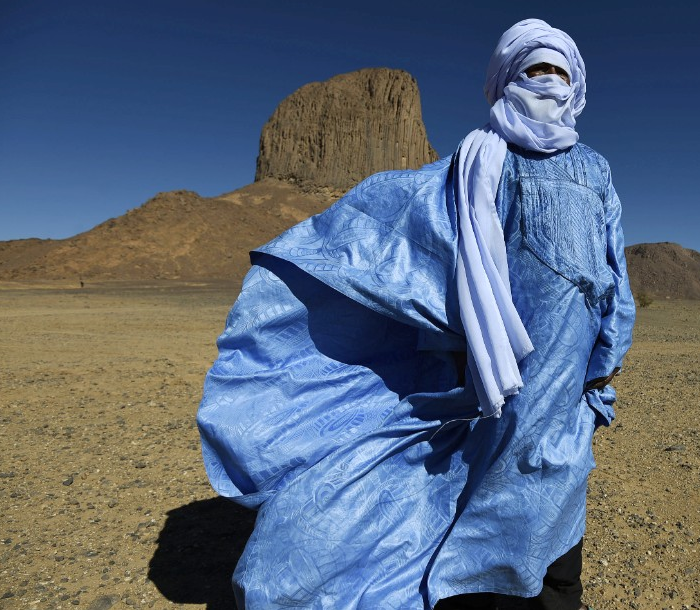
of Tangier and Marrakesh. A beautiful olive-skinned man dressed in a
magnificent sky-blue caftan and turban and looking like an extra from
Lawrence of Arabia invited me to visit his shop with an extravagant
sweep of his arm and a knee-buckling smile. I noticed his eyes were the
same colour as his caftan. All I could say was “Monsieur, vous etes
magnifique!”, to which he acknowledged my good taste with a slight
inclination of the head and a flutter of eyelashes.
Essaouira
specializes in cedar rootbole (known locally as “thuja”) woodcarvings,
everything from furniture to jewellery. Since our announcement that we
were getting married, I had been pestered by female colleagues about a
ring, which I adamantly refused since it was, to my mind, merely
advertising how much your intended is willing to spend on you. It did
not occur to me that NOT wearing a ring is pretty much the same thing.
For a joke Jim bought me a wooden engagement ring, which shut them up
back in Paris, and added a rootbole inlaid chess set to his collection.
The
beach at Essaouira is long and wide and windswept, great for dramatic
walks at dawn or dusk but not advised for swimming or sunbathing. The
weather there is something else. I never imagined I would be cold in
Africa, but the Atlantic winds belt in from the ocean like fury and the
fog rolls in unannounced at lightning speed. After dinner at the
Restaurant du Port, a Bogartesque fish place where we were amused by a
small boy baiting a live lobster and ended up singing “God Save the
Queen” to a table of drunken French tourists, we emerged onto the
quayside to find that a peasouper had descended on the town. The fishing
boats on their repair berths that we had passed earlier in the evening
were barely visible, and I suppressed visions of men in raincoats and
fedoras lurking behind lobster pots as we literally ran back to the
hotel through the darkness and the dense freezing fog, clutching our
thin holiday clothes tighter.
Marrakesh again
The
weather finally drove us from Essaouira, and we returned to Marrakesh
on a slightly better bus. Despite having promised Abdul faithfully that
we would stay at his hotel on our return, and having accepted his
invitation to come and eat with his family, we booked ourselves into the
Chems, a 4-star establishment just outside the town centre. The
restaurant and lounge areas were, again, a little package-tourish, but
our room on the ground floor gave straight onto a small terrace and an
excellent pool, the air conditioning worked, and the price was
reasonable. For four days we toasted ourselves by the pool in the
daytime and ate downtown in the evenings. It was lovely to be warm
again. I ventured outside the hotel in the day just once to visit the
world-famous Mamounia Hotel which was just across the road. This was
where Churchill had holed up during the second world war, and where the
rich and famous came for a change from Gstaad, St Moritz and Monte
Carlo. It was suitably impressive, rather like the Topkapi Museum with
bedrooms, but my expedition was fraught with hustle. I was accosted five
times between leaving the Chems and returning, the round trip couldn’t
have been more than 500 yards. Visit of the Casbah Madame, fiacre
Madame, taxi Madame, fiacre Madame, taxi Madame … I was practically
sprinting as I regained the safety of the Chems’ portals.
At night-time the square was fabulous. All the stalls had torches to light their wares, there were dancers and storytellers, food and drink, beggars, mystics and holy men, prostitutes and thieves. It was totally Old Testament. We ate in a third-floor restaurant on a corner of the square which was deserted except for a friendly owner/waiter in traditional breeches and waistcoat, and a flirty Persian cat. We had a corner table by an open window and enjoyed the square from a safe vantage-point. We were invited to rinse our hands in orange water poured from a huge brass kettle before eating. We had pigeon pie (pastilla) and other Moroccan delicacies, which we shared with the cat, who flirted outrageously with Jim for titbits and totally ignored me. When she had eaten she disappeared, but joined us again for coffee and sort of apologized to me, but you know how it is, a girl’s gotta eat. We gave the owner a photocopy of the page from Rogerson which recommended his restaurant, which he delightedly added to his already full scrapbook of press cuttings.
Casablanca
After four days in Marrakesh, we took a train to Casablanca. The train timetable was wrong, so we had a long wait at Marrakesh station. An elderly porter had assigned himself to us on arrival, and patiently waited two hours to carry our bags onto the train. He regarded his tip philosophically, then asked for one from me, which he promptly declared to be insufficient. All this was done with a patient air and an amused grin, as if to say “Do we have to teach you how to be tourists, too?”. He eventually agreed to go after more dirhams and half an packet of Benson & Hedges. Casablanca does not live up to its name. It is not white, to start with. It is a developed, sophisticated, commercial and very boring city. It has neither the quiet dignity of royal Rabat nor the pulsating beat of Tangier or Marrakesh. It doesn’t even have a beach. The hotel room was the size of a tennis court but very intercontinentally banal, and the fish restaurant on the port that had been recommended was closed. We had a very poor meal in a cheapish restaurant and wrote off Casablanca. It was about the only place in all of Morocco where I didn’t see Bogart’s ghost.
Rabat again


Comments
Post a Comment